
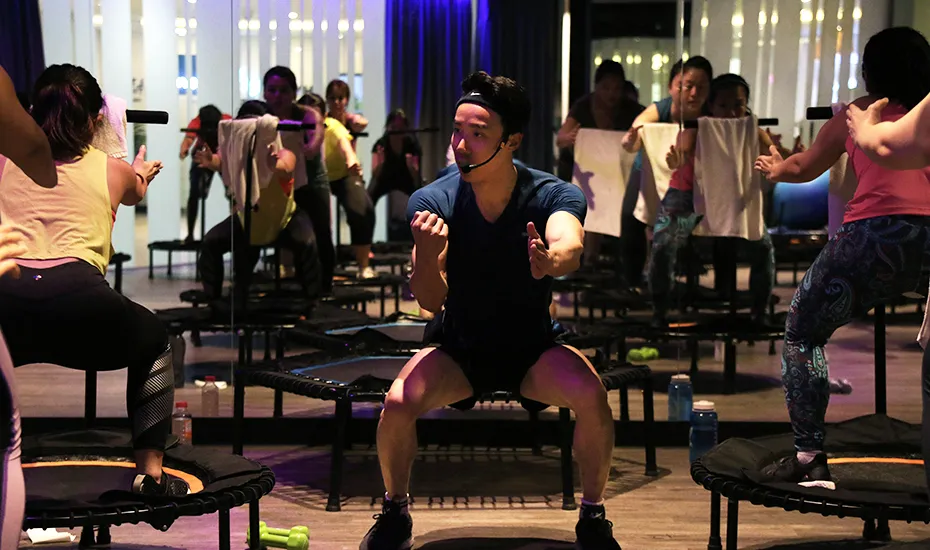

A well-designed trampoline class singapore participants can follow should offer more than energetic music and continuous jumping. Cadence, which describes the rhythm or frequency of each rebound, can be used as a practical tool for controlling workout intensity without requiring participants to jump higher or perform increasingly complicated movements.
This approach is particularly useful in a mixed-ability class. Two people can follow the same movement pattern while working at different intensities by adjusting their rhythm, rebound height and arm involvement. Understanding these variables allows participants to train with greater purpose instead of assuming that faster or higher jumps are always better.
Cadence Is More Than Jumping Speed
Cadence determines how frequently the feet contact the trampoline surface. A faster cadence usually requires shorter, more controlled rebounds, while a slower cadence allows more time for larger movements or deliberate changes in direction.
However, speed alone does not define difficulty. A participant can maintain a moderate cadence while increasing resistance through deeper leg action, stronger arm movements or longer working intervals. Conversely, a fast cadence performed with shallow, relaxed movements may feel manageable despite the greater number of contacts.
The goal is to match cadence with movement quality. When rhythm increases beyond a participant’s ability to maintain posture and landing control, the additional speed stops being productive.
Establishing a Sustainable Working Rhythm
Participants should first identify a cadence they can maintain while breathing steadily and landing consistently. This becomes a useful reference point for the rest of the class.
During this phase, the feet should remain relatively close to the trampoline surface. The knees should track naturally over the feet, while the torso remains controlled rather than rocking excessively with every rebound.
A sustainable rhythm should feel purposeful but repeatable. Participants should be able to maintain it for several minutes without losing coordination. Once this baseline has been established, the instructor can introduce short changes in speed or movement complexity.
Using Three Practical Cadence Zones
Cadence can be organised into three broad working zones without relying on exact numbers.
A controlled zone uses a measured rhythm that allows participants to focus on posture, balance and movement preparation. It works well during warm-ups, recovery periods and technical sequences.
A working zone feels noticeably more demanding but remains sustainable. Participants can still respond to coaching cues and maintain consistent landings. Much of the class can be completed in this zone because it provides meaningful conditioning without excessive fatigue.
A peak zone uses brief increases in cadence for short intervals. Breathing becomes more demanding, but posture and control should remain intact. Peak work is most effective when it is deliberately limited rather than used throughout the entire session.
Members attending classes through TFX Singapore can use these zones to make each workout appropriate for their current fitness and recovery level. The same class structure can therefore remain useful as capacity improves.
Rebound Height Changes the Demands
Increasing jump height creates a different challenge from increasing cadence. Higher rebounds require more time in the air, greater control during landing and a stronger response from the legs.
Participants should not attempt to combine maximum cadence with maximum height. This often leads to rushed landings, unstable foot placement and unnecessary tension through the shoulders.
A more effective progression is to change one variable at a time. During a fast sequence, rebound height can remain modest. During a slower sequence, participants may use a greater range of motion while maintaining deliberate control.
This distinction helps prevent every interval from becoming the same type of effort.
Arm Movements Can Raise Intensity Safely
The arms can significantly change how demanding a rebound sequence feels. Driving the arms overhead, extending them laterally or coordinating them with alternating leg patterns increases total-body involvement.
For participants who are not ready to increase cadence, stronger arm actions can provide a useful progression. They can retain a stable jumping rhythm while increasing the amount of muscular work performed.
Arm movements should still remain coordinated with the lower body. If the arms begin pulling the torso away from a stable position, the movement should be simplified. Quality remains more important than range.
Monitoring Effort Without Relying on a Device
Heart-rate monitors and fitness watches may provide useful information, but they are not always necessary for controlling intensity. Participants can use breathing, movement quality and perceived effort as immediate feedback.
During moderate work, speaking a short sentence should remain possible, although not completely comfortable. During a peak interval, speech may become more difficult, but the participant should still feel in control of the movement.
If breathing remains highly elevated after a recovery interval, the previous cadence may have been too aggressive. The next working block can be adjusted by reducing speed, rebound height or arm involvement.
This approach is often more useful than trying to match another participant’s pace.
How Instructors Can Structure Cadence Progression
A class can begin with a stable rhythm before introducing short increases. For example, participants may complete two minutes at a controlled cadence, followed by 30 seconds at a faster pace and 30 seconds of active recovery.
Later rounds can extend the faster section or combine cadence with directional movements. The instructor can also reduce the recovery period once participants demonstrate that their technique remains consistent.
Progression should not occur automatically. If landing noise becomes heavier, posture changes or participants stop responding to cues, the class has likely moved beyond an effective level.
Experienced participants can make the same sequence harder by using stronger leg drive or more deliberate arm action. Newer participants can maintain a lower rebound while following the overall rhythm.
Singapore-Specific Training Considerations
Many Singapore residents attend classes before work, during lunch or after a long day in the office. Their readiness may vary depending on sleep, commuting, hydration and workload.
A participant arriving after an exhausting day should not feel pressured to match a previous performance. Starting in the controlled zone allows the body and concentration to settle before deciding whether greater intensity is appropriate.
Indoor trampoline classes also provide a predictable environment during humid or rainy conditions. However, participants can still sweat heavily, so hydration and appropriate clothing remain important.
The class schedule should be considered alongside other weekly training. Someone who has completed a demanding leg workout may use lower cadence and smaller rebounds while still benefiting from coordination and aerobic work.
Common Cadence Mistakes
One common mistake is increasing speed before establishing balance. This produces rapid but inconsistent contacts that make directional changes harder to control.
Another mistake is treating recovery intervals as completely unimportant. Active recovery allows breathing and technique to settle while preserving movement. It prepares participants for the next quality interval.
Participants may also allow the music to determine every movement. Music creates energy and rhythm, but the appropriate cadence should still reflect the individual’s control and current capacity.
Finally, some people judge effort only by sweat. Singapore’s humid conditions and individual sweat rates can make this misleading. Cadence, breathing and movement quality offer more useful feedback.
Building Long-Term Progress
Cadence becomes valuable when it is used consistently over several sessions. Participants can observe whether they maintain a working rhythm for longer, recover faster between intervals or complete more complex movements without losing control.
Progress does not require every class to become faster. Improved posture, quieter landings, more stable directional changes and better recovery are equally meaningful signs.
A well-managed trampoline class should challenge participants while allowing them to finish with confidence in their movement. By treating cadence as an adjustable training variable, participants can regulate intensity, respond to their daily readiness and continue progressing without turning every workout into an uncontrolled race.

Comments are closed.