
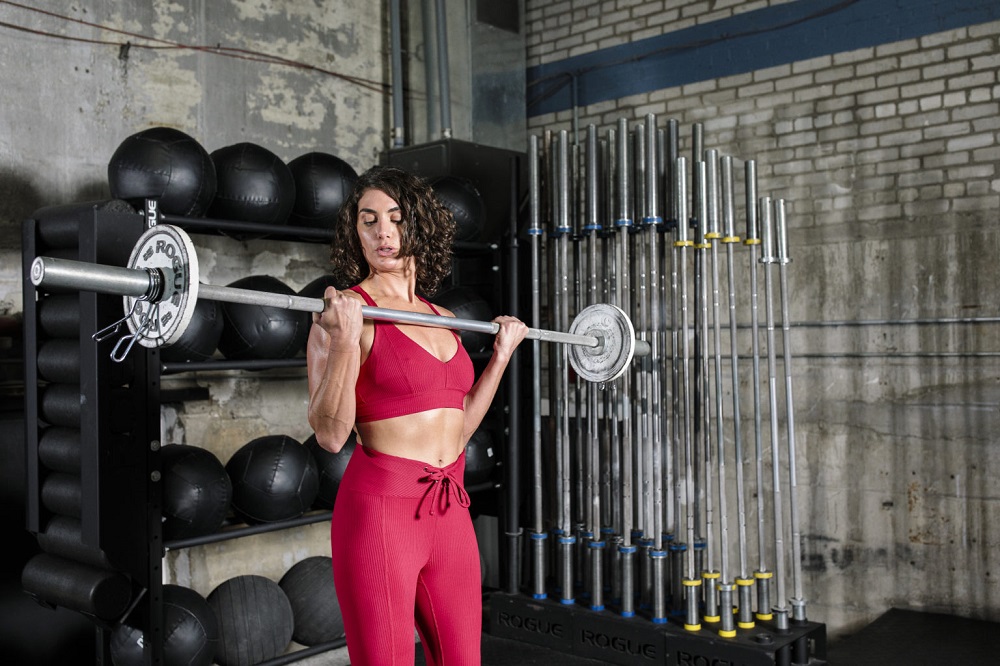

When stepping onto a gym floor, the temptation to load heavy weight onto a barbell or select the highest pin on a weight stack can be intense. Driven by competitive drive, social media standards, or simple impatience, many gym-goers prioritize the quantity of weight lifted over the quality of each movement. This habit, commonly referred to as ego lifting, is one of the most significant obstacles to sustainable physical development.
Proper exercise form is not an arbitrary set of stylistic rules created by purists. It is the practical application of human biomechanics designed to maximize muscular tension on target tissues while minimizing destructive stress on vulnerable skeletal structures, tendons, and ligaments. Executing exercises with technical precision establishes the foundation for consistent strength gains, accelerated muscle hypertrophy, efficient energy transfer, and decades of pain-free athletic longevity.
The Biomechanical Science Behind Proper Exercise Form
Every exercise performed in the gym represents a mechanical system governed by levers, fulcrums, torque, and line of force. When you lift a weight, your joints serve as fulcrums, your bones act as levers, and your skeletal muscles generate the internal tension required to overcome the external load.
-
Targeted Muscle Recruitment: Skeletal muscles contract along specific lines of pennation and anatomical origin-to-insertion pathways. When your body alignment is correct, the load is placed directly against the muscle fibers you intend to train. Altering your posture or shifting your joint angles transfers that mechanical tension away from the target muscle and onto secondary assistance muscles or passive connective tissues.
-
Minimizing Detrimental Shear Stress: Human joints are designed to handle compressive loads far better than shear forces. For example, lifting with a rounded lumbar spine during a heavy deadlift subjects the intervertebral discs to immense anterior-posterior shear stress, vastly increasing the risk of acute disc herniation. Maintaining a neutral spine converts that stress into manageable axial compression, which the spinal column is naturally structured to support.
-
Optimizing Moment Arms: The distance between a joint axis and the line of resistance is known as the moment arm. Proper technique ensures that moment arms remain optimal throughout the repetition, challenging the target muscle through its strongest active range rather than creating excessive mechanical disadvantage that forces joint hyperextension.
Maximizing Muscle Hypertrophy and True Strength Development
Many lifters believe that moving more weight by any means necessary leads to faster muscle growth. However, muscle tissue does not have eyes; it cannot read the numbers stamped on the side of a dumbbell. Muscle tissue responds exclusively to mechanical tension, metabolic stress, and the degree of motor unit recruitment.
-
Standardizing the Range of Motion: Cutting an exercise short, such as performing half-depth squats or bouncing a barbell off the chest during a bench press, deprives the muscle of tension in its lengthened, stretched position. Scientific research consistently demonstrates that training through a full, active range of motion produces superior hypertrophy compared to partial repetitions with heavier weights.
-
Eliminating Momentum and Bouncing: Swinging the torso during bicep curls or using knee flexion to initiate lateral shoulder raises relies on momentum and kinetic rebound rather than active muscular contraction. Removing momentum forces the target muscle to perform 100 percent of the mechanical work throughout the entire concentric and eccentric phases.
-
Creating a Reliable Metric for Progressive Overload: The fundamental driver of muscle and strength gains is progressive overload, which requires gradually increasing the demands placed on the body over time. If your lifting technique changes from week to week, you cannot accurately measure progress. Adding five pounds to a lift is meaningless if your range of motion decreased by two inches to accommodate the added weight. Strict form provides a stable, repeatable baseline for genuine progress tracking.
Injury Prevention and Long-Term Joint Longevity
Gym injuries generally fall into two broad categories: catastrophic acute trauma and cumulative microtrauma. Maintaining rigorous technical standards provides the primary line of defense against both forms of physical breakdown.
Preventing Acute Traumatic Tears and Herniations
Acute injuries occur when the instantaneous mechanical stress applied to a biological tissue exceeds its ultimate tensile failure threshold. This happens frequently when a lifter loses structural bracing, allows a joint to collapse inward, or catches a falling weight out of position. Common acute injuries caused by poor form include pectoral tendon ruptures from over-flaring elbows during bench presses, distal bicep tears from jerking heavy deadlifts with bent arms, and acute meniscal tears from uncontrolled knee valgus under heavy squat loads.
Mitigating Cumulative Microtrauma and Overuse Syndromes
More common than catastrophic tears is the slow accumulation of micro-damage caused by repetitive friction and poor joint tracking. When an exercise is performed with improper alignment hundreds of times over months and years, structural wear accelerates.
-
Subacromial Impingement: Flaring the elbows at a 90-degree angle during pressing exercises repeatedly compresses the supraspinatus tendon and subacromial bursa against the acromion bone of the shoulder blade, leading to chronic rotator cuff tendinopathy.
-
Patellar Tendon Overload: Allowing the heels to rise and driving excessive forward knee displacement during lunges or leg presses without proper hip hinging concentrates sheer force directly into the patellar tendon, resulting in chronic anterior knee pain.
-
Lumbar Facet Joint Irritation: Hyperextending the lower back at the top of an overhead press or deadlift compresses the delicate posterior facet joints of the lumbar vertebrae, causing chronic nerve inflammation and localized muscle spasms.
Biomechanical Checkpoints for Fundamental Movement Patterns
Mastering foundational movement patterns ensures that your technique remains robust across all equipment variations, whether using free weights, cables, or machines.
| Movement Pattern | Primary Mechanical Objective | Common Technical Breakdown | Corrective Biomechanical Cue |
| The Squat | Symmetrical lower-body knee and hip flexion | Knees collapsing inward, heels lifting off floor | Drive knees out in line with toes, maintain three points of foot contact |
| The Hip Hinge | Posterior pelvic displacement with minimal knee flexion | Rounding the lumbar spine to reach the floor | Push hips straight back toward the wall behind you, brace core |
| The Horizontal Press | Pectoral recruitment with scapular stabilization | Flaring elbows perpendicular to torso, loose shoulders | Retract and depress shoulder blades, tuck elbows to a 45-degree angle |
| The Horizontal Pull | Latissimus and rhomboid contraction | Shrugging upper traps, pulling purely with arms | Initiate movement by driving elbows back, keep shoulders depressed |
| The Overhead Press | Vertical shoulder and tricep extension | Hyperextending lower back to lean backward | Squeeze glutes, lock ribcage down toward pelvis, press straight upward |
The Role of Intra-Abdominal Pressure and Core Bracing
One of the most widely misunderstood aspects of lifting form is core bracing. Many beginners are incorrectly taught to suck their stomach inward toward the spine during heavy lifts. In reality, proper spinal protection requires the creation of rigid intra-abdominal pressure.
-
The 360-Degree Expansion: Proper bracing begins by taking a deep diaphragmatic breath into the lower abdomen, sides, and lower back, rather than expanding the upper chest.
-
The Valsalva Maneuver: Once the breath is taken, you contract your abdominal wall, obliques, and spinal erectors outward against that air pocket, as if preparing to take a physical impact to the stomach.
-
Rigid Hydraulic Cylinder Effect: This action creates a high-pressure pneumatic cylinder inside the abdominal cavity that stabilizes the lumbar spine from the inside out, preventing spinal flexion and transferring force efficiently between the lower and upper body during heavy compound lifts.
Practical Strategies for Mastering and Auditing Lifting Technique
Perfecting your exercise form is an active, continuous process that requires intentional practice, honest self-assessment, and mental discipline.
-
Film Your Working Sets: The sensation of a lift from the inside often feels completely different from what is actually occurring externally. Set your phone at hip height and record your compound lifts from a 45-degree angle. Reviewing your footage between sets reveals depth discrepancies, bar path deviations, and subtle spinal rounding immediately.
-
Incorporate Deliberate Tempo Training: Lowering the weight under complete control using a three-to-four-second eccentric phase eliminates reliance on gravity and builds spatial awareness. If you cannot pause for one second at the bottom transition point of an exercise without collapsing, the weight is too heavy.
-
Check Your Ego at the Entrance: Recognize that lifting lighter weights with exceptional, strict technique stimulates substantially more muscle growth and delivers faster strength progression than hoisting heavy loads with sloppy mechanics. True lifting mastery is defined by making heavy weights look light and controlled.
Frequently Asked Questions
How do you distinguish between good muscular fatigue and dangerous form breakdown during a high-intensity set?
Muscular fatigue manifests as a slowing of movement velocity while joint angles, bar path, and spinal alignment remain completely rigid and unchanged. Dangerous form breakdown occurs when your body begins recruiting unintended muscle groups or altering skeletal alignment to finish the rep, such as arching your lower back during a chest press, hitching a deadlift across your thighs, or letting your knees cave inward during a squat. The moment structural alignment changes, the set must be terminated.
Can individual anatomical variations change what proper form looks like for different people?
Yes. Skeletal variations such as femur length, torso-to-limb ratios, pelvic structure, and hip socket depth significantly influence joint angles during exercises. For example, an individual with long femurs and a short torso will naturally display a more forward torso lean during a barbell back squat compared to someone with short femurs and a long torso. Proper form respects universal safety principles (such as maintaining a neutral spine and keeping knees tracking with toes) while allowing individual stance widths and movement paths to match unique bone structures.
What is the difference between dynamic mobility drills and static stretching for improving lifting form?
Dynamic mobility drills involve moving joints through full active ranges of motion with controlled muscle activation (such as leg swings, bodyweight deep squats, and shoulder dislocates), which increases core body temperature, lubricates joints with synovial fluid, and prepares the nervous system for loading. Static stretching involves holding a relaxed muscle in a lengthened position for extended periods, which temporarily decreases muscular power output and tendon stiffness without actively teaching the nervous system how to stabilize a joint under load.
Is it ever acceptable to use loose form or controlled cheating during strength training?
Advanced, highly experienced lifters occasionally utilize controlled cheating on specific isolation exercises, such as using slight hip drive on the final repetition of a bicep curl or lateral raise to bypass a sticking point and overload the eccentric phase. However, this is a calculated advanced intensity technique that should never be applied to heavy compound spinal-loading movements like squats, deadlifts, or overhead presses, where slight technical deviations carry severe injury risks.
How does improper breathing mechanics during heavy lifts compromise structural lifting form?
Breathing erratically or exhaling completely at the bottom of a heavy squat or bench press deflates intra-abdominal pressure, causing the core musculature to lose tension. This loss of internal pressure forces the passive structures of the spine and ribcage to absorb the mechanical load directly, leading to instantaneous lumbar flexion, upper-back rounding, and joint instability.
How does footwear affect lifting technique during compound lower body movements?
Standard running shoes feature soft, cushioned foam soles designed to absorb impact, which creates an unstable, squishy foundation during heavy lifting that causes ankle pronation and power dissipation. Lifting requires flat, non-compressible soles (such as barefoot-style shoes or classic canvas flat shoes) or specialized weightlifting shoes with elevated, solid wooden or plastic heels. Solid soles maximize ground force transmission, prevent foot rollover, and improve balance.
What should a lifter do immediately if they feel a sharp pain mid-repetition?
If you experience a sudden, sharp, or electrical pain during a lift, immediately abort the repetition in a controlled manner, rack or drop the weight safely, and stop the exercise. Sharp localized pain indicates acute tissue strain, nerve impingement, or joint subluxation, which is fundamentally distinct from the diffuse, burning sensation of muscular fatigue. Attempting to push through sharp pain transforms minor micro-strains into severe, long-term tears.

Comments are closed.